Total Pageviews

Search This Blog

Tuesday, June 28, 2011

More bee attractive plants - Quadra Island

This orange flower's name escapes me.  I will add it in later.
the bumble bees loved this plant
The changing vista of an island

The view.


This bumble bee is a male- indicated by the yellow face.
Once you see males foraging in the garden,
the bumble bee colony is near its end.  The queens mate,
and hibernate
by themselves in the ground.

Friday, June 24, 2011

Bee attractive flowers in Joe's garden

Drumstick Onions with a bumble bee
embedded within the florets
Joe has a great garden for bees.  He tries to have continuous bloom so that bees always have food available to them.
Another onion drumstick with a bumble bee.

Beautiful red columbine with drumstick onions in the background.


Joe S. and three of his gorgeous rhododendrons in bloom.  He tries to attain continuous bloom so that
bees always have food available.

Monday, June 20, 2011

Paris gardens,France

Paris, Parc de Bercy.
A quiet space, away from the hustle and bustle
Paris:  The hustle and bustle of a thorougfare


Just around the corner from the hustle and bustle!
We have arrived in Paris!  

River Seine

Bluebell


A vegetable garden within the park


Friday, June 17, 2011

Bee attractive flowers in a Dutch Garden

During my visit to Holland, I was lucky to see a number of gardens that belonged to friends and relatives    Here are some of the bee attractive plants I saw in these gardens.


A close up of the tiny pink flower.
Unfortunately I do not know the name of this 5 foot
high bush.  The tiny pink flowers were very
attractive to bees.
Pink Delphinium
Foxglove


Holland: bicycle stall at a railway station.
Bluebell


Old city of Dordrecht, Holland

Thursday, June 16, 2011

Bee attractive sage ground-cover- Quadra island

Right in front of the medical clinic on Quadra Island,  a raised bed had some surprises in store for me.  I was certainly not expecting numerous bumble bees foraging on 4 patches of sage ground cover.  We were meandering along the store fronts, and there they were- too busy to take any notice of the photographer.
Very little of the ground covers' green leaves were visible amongst the dense layers of flowers.

There were numerous bumble bees present on these patches of sage.


The bees' tongue is visible probing the flowers


Tuesday, June 14, 2011

Joe's bumble bee nest

Two bumble bees ready for flight.
This is a large new queen that will be
hibernating over the winter.
Joe S. from Burnaby showed me his 'bumble bee house'.  He told me he always has swallows and chickadee nests up and often they are used by the birds.  And ever so often the chickadee nests are used as a bumble bee nest.  So this year, he asked around if anyone had an old chickadee nest, to please pass it on to him.  He received one placed it in an old chickadee nest, and bingo, the bees arrived.  Chickadee nests have quite a lot of hair in them, and he believes this might be the attractant, like a mouse nest.  I am going to try this, but first I need a chickadee nest.


One guard, checks out the photographer. The splatter pattern
 on the outside of the box is the feces of the bumble bee.

To make the box more to their liking, the bees even
plugged up the large crack at the front of the box.

Sunday, June 12, 2011

Olive tree flowers in Italy


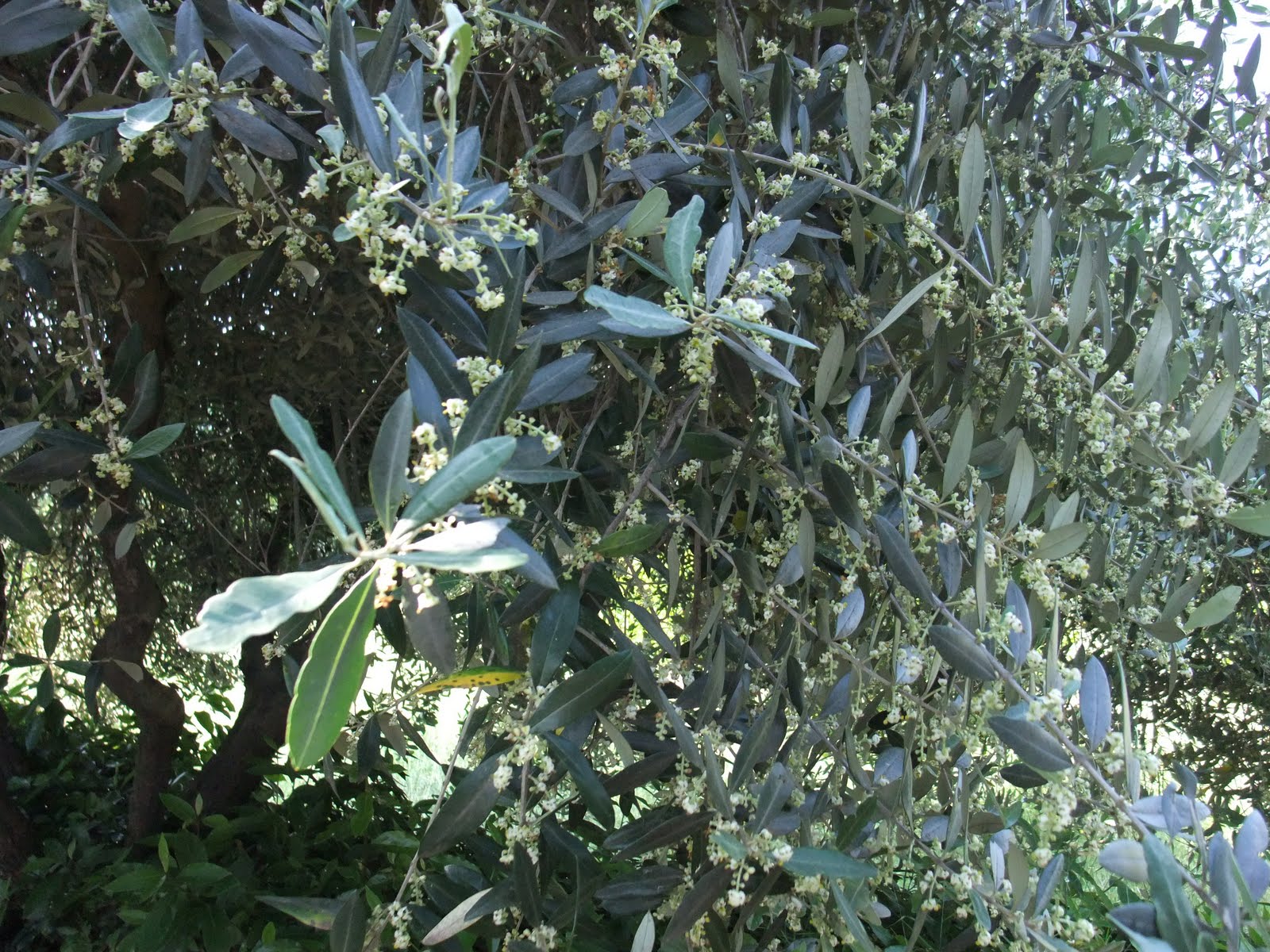
We had a wonderful visit to Rome.  Always on the look-out for Bee pollinated flowers, I managed to see an olive tree in full bloom.  Olive trees have a grey foliage with tiny cream coloured flowers. 
Olive tree flowers in full bloom- end of May.

The huge and awesome Colosseum of Rome.

The local roads of the ancient Roman town of Pompei with Mt Vesuvius in the background.


One of the beautiful mosaics of Pompei.  
A delicate 5 coloured mosaic in the ancient coastal port of Rome,  Ostia Antica.
Most mosaics that we saw were black and white.

Flower market in Utrecht, Holland

Flower Market in Utrecht, Holland
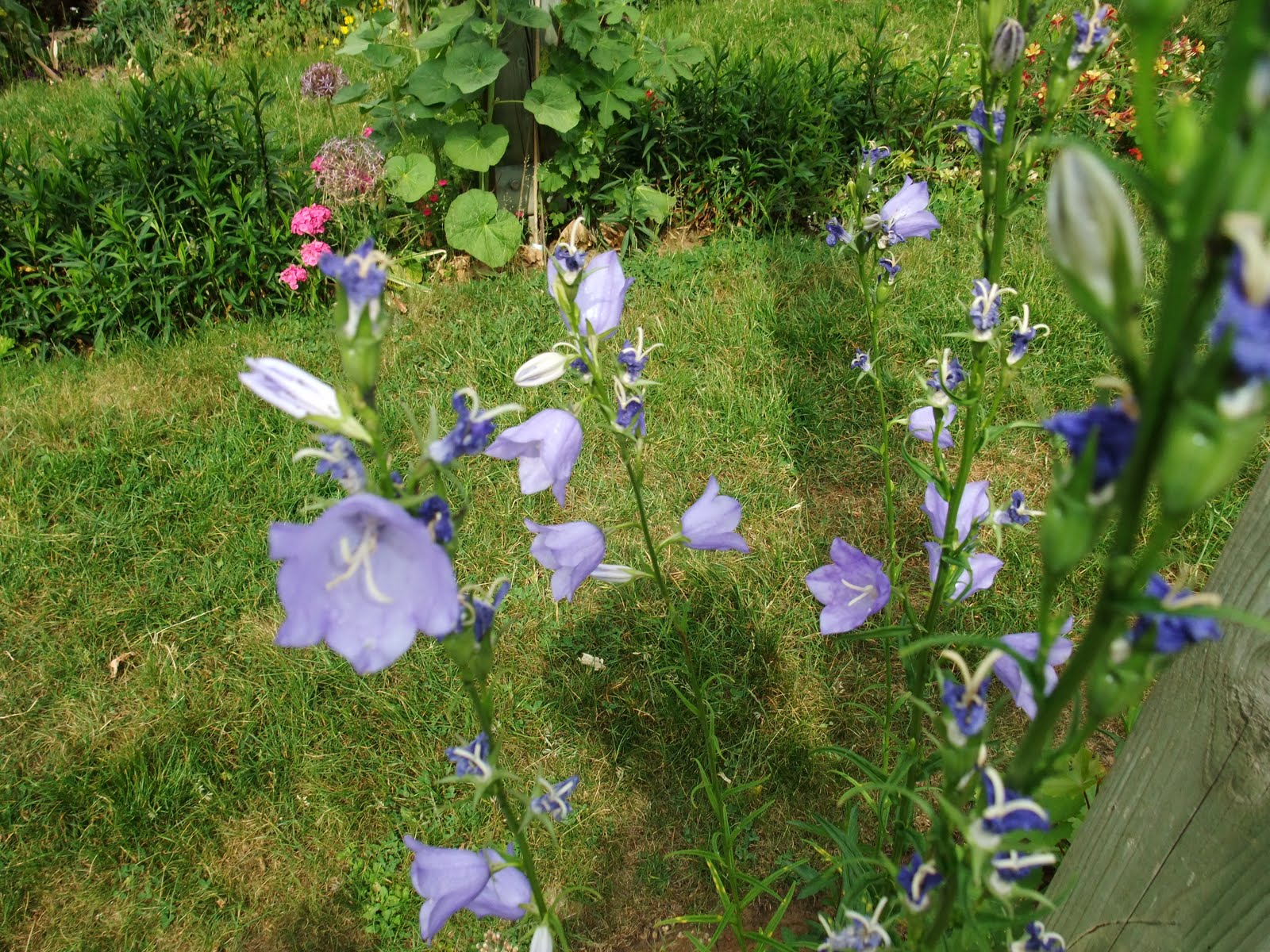
Campanula- a bee attractive plant.
These two varieties of bee attractive Sage
Salvia, a bee attractive plant
Buying flowers at the market
Here a  few pictures of bee attractive flowers at a flower market in Utrecht, Holland.  I only took pictures of flowers that had bumble bees foraging amongst the flowers.  This is a great way to buy flowers that are bee attractive and flowers that will feed bees in your garden.


Joe predator proofs his full mason bee nests

The screen dangles from a screw at this nest.
Joe S.  from Burnaby, has come up with a very simple way of protecting his nests AFTER bees have stopped flying or when the nest is full ( Note:  Mason Bees tend to avoid nests with screens).

The screen is not fixed into place but dangles and moves with the wind, making it very awkward for woodpeckers to land at the nest.

Paperclips are used here to give the screen
the proper positioning over the nesting holes.

Saturday, June 11, 2011

Flowers for Bees

Over the past several weeks, during my travels, I kept my eyes open for 'Bee attractive' plant's.  I watched out for bees on flowers knowing that these plants provide the bee with pollen or nectar or both.  Keep in mind that a 'bee attractive plant may not always appear attractive to bees.    For instance, when more attractive (provide more food) flowers are present, bees go to the rich source of food, and not the poor source of food.  Visitation strongly depends on if other attractive flowers are present in the area.  If you don't see any bees on a variety of flowers, it might mean temperatures are too cold, or that there are no bees in the vicinity.

Thursday, June 9, 2011

Early summer management-removing cocoon cases

It is time to remove mason bee cocoon hulls at the end of spring.  
Earlier in the spring, Mason Bees chewed their
 way out of their cocoons, leaving the cocoon hulls.


The timing of this somewhat depends on the weather off course.  I can't believe it is 9 June and a few mason bees are still flying!  
Remove Release house and examine
cocoon hulls inside.
When only a few mason bees remain active at the nest it is time to remove cocoon hulls.  Nest tunnels have been filled over the past month or so, and pretty well all activity is at or near its end.  Cocoon hulls may contain developing parasitic wasps and wasps can destroy a lot of newly developing cocoons.
  
Empty cocoon remains from the emergence
box to a transparent container, like a petridish.
Take cocoon release houses down, and remove all cocoons in  a transparent container, such as a large petri dish.  Make sure that cocoons are one layer thick.  Leave at room temperature.  If any additional bees emerge, release them.  If no bees emerge over the next 3 to 4 days, it is unlikely that there are any unemerged- live bees inside the cocoon.

Check for total emergence.  See what percentage of cocoons emerged successfully.  If success is greater than 95% you have done well.  If it is less, then carefully open closed cocoons to see what is inside. 
Cocoon contents might be parasitic wasps or pollen lumps where the bee larvae has died during development.  Other finds might be parasitc fungi- black pupal cases.  Do the examining over a piece of newspaper, so it can be discarded.

Wednesday, June 8, 2011

Link to Youtube Beediversemasonbees

I have added two clips.  One of mason bees flying around and pollinating Kale flowers.  The second is one on mason bees using the Corn Quicklock nesting trays.
 Go to link http://www.youtube.com/user/Beediversemasonbees

Sunday, May 29, 2011

Flowers for Bees

Flowers provide food for bees in the form of nectar and pollen.  Thus flowers are critical to their survival.  However, not all flowers produce pollen and nectar.  The best way to find flowers that are attractive to bees is to go to a garden center on a sunny day.  Bees will point the way to attractive flowers, the ones that will provide them pollen or nectar or both.  The ultimate for bees is the have a garden that has continuous bloom from spring through the summer.

Tuesday, May 24, 2011

Effect of overwintering temperatures-RESEARCH ARTICLE

A very interesting article by Bosch and Kemp from Utah State University in Logan, on the effect of overwintering temperatures.  This is a summary of their research results.

http://www.apidologie.org/10.1051/apido:2004035

Sunday, May 22, 2011

Setting out cocoons- SMALL scale verses LARGE scale

Mass release of alfalfa
leaf cutter bee cocoons.
I started this article some time ago, before I had all the pictures in place.  Even though most mason bees have been set out, I think it is good to compare mason bee release systems to the commercial Alfalfa Leaf cutter bee industry mas  release system.  I think we can learn a lot from the 50 year old alfalfa leaf cutter bee industry.

How to set out bees, still in their cocoons, depends on quantity of cocoons, type of nests and whether predators exist in the area.

Leaf cutter bee nests
Alfalfa leaf cutter bee producers in the Canadian Prairies, usually mass release leaf cutter bee cocoons on trays.  Thousands of cocoons are placed on trays.  Trays are set up inside yurts or similar structures that house leafcutter bee nests. Three weeks prior to setting cocoons out, leafcutter bees are put through a warming period so that bee emergence is relatively fast.  Trays are out for less than a week.  A mere 7 days or so is little time for winds and predators to upset the trays full of cocoons.
Prairie yurt with a tray of cocoons
set on top of nests.
It is a different story with mason bees.  Emergence is often longer than a week, especially under cool spring temperatures.  The number of cocoons set out are often  less than a hundred or several hundred and less often in the thousands.

Setting out a few cocoons (less than 100) small vials with a bee size hole in the lid works well.  Plastic vials are usually rodent proof.  The space underneath the roof of the Beediverse Highrise  is a great place to place the vial full of cocoons.  This space is protected from the sun, but receives the heat through the roof.
the Highrise roof protects vials
of cocoons from
predation and sun.

Beediverse Emergence box
protects cocoons from predation
and the elements.
When setting out 100 or more cocoons, small vials are too cumbersome and too time consuming.  It would be very easy to set out cocoons in open trays.  I have tried setting cocoons out in trays, even in covered trays, but it has been less successful.  Their extended emergence becomes problematic.  Winds sometimes tip trays onto the ground  Trays also make cocoons more vulnerable to predation from animals such as spiders, squirrels, mice, and wasps.  To decrease the chance of predation a wooden box with an exit hole such as the Beediverse Emergence Shelters gives the best result.  Two are sold for $19.95.

Small and large release boxes.
Dave M.  Port Alberni BC
I find these extremely handy.  I fit about 200 cocoons into each one.  I make notes on the outside to tell me where cocoons were produced.  This is handy because after spring emergence, I can check what the emergence was the previous spring.  Emergence should be 95% or more.

David M. from Port Alberni uses a square box with a hinged lid.  Each box, with two layers of cocoons, holds about 2000 cocoons.

If you have a system you would like to share with our readers, email me a description and pictures.